
In recent years, alternative currencies have gained traction as individuals and communities seek diverse means of trade and value storage. One such innovation is the Goldback, a gold-backed local currency that has garnered attention for its unique approach to monetary transactions. This article delves into the emergence and history of Nevada Goldbacks, exploring their inception, adoption, challenges, and future prospects.
Introduction to Goldbacks
Concept and Origin
Goldbacks are a form of voluntary, complementary currency that contain a thin layer of 24-karat gold within a polymer coating. Each Goldback note is denominated in specific values, with the amount of gold content increasing with higher denominations. The concept was first introduced in Utah in 2019, aiming to create a tangible, spendable form of gold for everyday transactions. The success in Utah led to the expansion of Goldbacks to other states, each featuring unique designs that reflect their heritage and culture.
Expansion Across States
Following the initial launch in Utah, Goldbacks expanded to states including Nevada, New Hampshire, Wyoming, and South Dakota. Each state’s series features unique designs that reflect its heritage and culture. The expansion signifies a growing interest in localized, gold-backed currencies as viable alternatives or complements to traditional money.
The Launch of Nevada Goldbacks
Design and Denominations
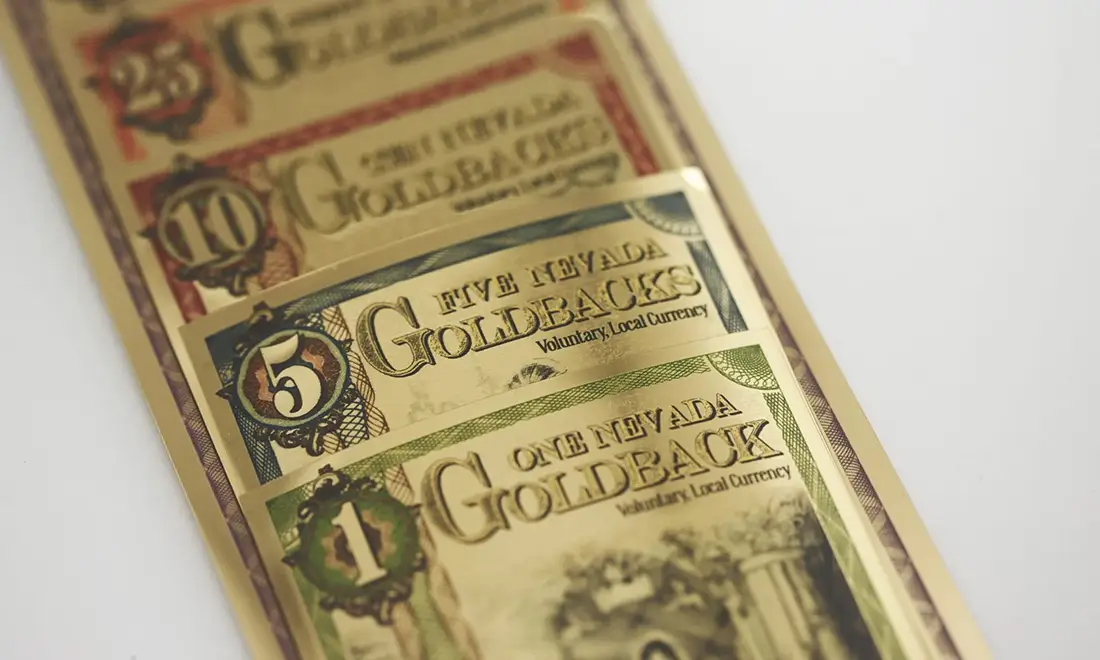
The Nevada Goldback series was officially launched in 2020, following the success of the Utah series. This series includes denominations of 1, 5, 10, 25, and 50 Goldbacks, each containing a specific amount of gold proportional to its denomination. The design of each note is intricate, featuring artwork that reflects Nevada’s rich history, culture, and natural beauty.
Symbolism in Artwork
Each denomination in the Nevada Goldback series features a unique design that embodies various virtues and symbols significant to the state. For instance, the 1 Goldback note features Caritas (Charity), depicted with elements such as the Sierra Nevada Lily and imagery inspired by St. Augustine’s Catholic Church in Austin, Nevada. The 5 Goldback note showcases Sophia (Wisdom), surrounded by symbols of knowledge and progress, including representations of Nevada’s educational institutions and historical artifacts.
Adoption and Circulation in Nevada
Acceptance by Businesses
Since their introduction, Nevada Goldbacks have seen gradual adoption among local businesses. A number of merchants have begun accepting Goldbacks as a form of payment, viewing them as a means to promote local commerce and offer customers an alternative to traditional currency.
Public Reception and Usage
The public’s reception of Nevada Goldbacks has been mixed. Collectors and enthusiasts appreciate the artistic designs and the intrinsic value of the gold content. Some consumers have started using Goldbacks for everyday transactions, gifts, and as a means of holding tangible assets. However, widespread usage is still developing, with broader acceptance dependent on increased awareness and education about the currency.
Challenges and Criticisms
Premium Over Gold Content
One of the primary criticisms of Goldbacks is the premium over the intrinsic gold content. The cost of production, including the intricate designs and security features, results in a price higher than the gold value alone. Some argue that this premium may deter potential users seeking purely investment-grade gold.
Limited Acceptance
While the number of businesses accepting Goldbacks is growing, acceptance remains limited compared to traditional currency. This limitation can hinder the practicality of using Goldbacks for all transactions, potentially restricting their use to niche markets or specific communities.
Regulatory and Legal Considerations
Goldbacks are not recognized as legal tender but function as a voluntary barter currency. This status raises questions about taxation and regulatory compliance. Users and businesses must navigate the legal landscape carefully to ensure adherence to state and federal laws.
Future Prospects of Nevada Goldbacks
Potential for Wider Adoption
The future of Nevada Goldbacks hinges on increased acceptance among businesses and consumers. Efforts to educate the public about the benefits and uses of Goldbacks could facilitate broader adoption. Additionally, partnerships with local businesses and community organizations may enhance their circulation and acceptance.
Impact on the Local Economy
If widely adopted, Nevada Goldbacks could have a positive impact on the local economy by promoting spending within the community and providing an alternative means of trade. They offer a way to keep wealth within the state and support local businesses, potentially contributing to economic resilience.