Goldback basics
Physical gold, divided for real life.
A Goldback places a measured amount of 24-karat gold inside a durable note. Nevada’s denominations make that gold easier to hold, recognize, gift, and exchange voluntarily.
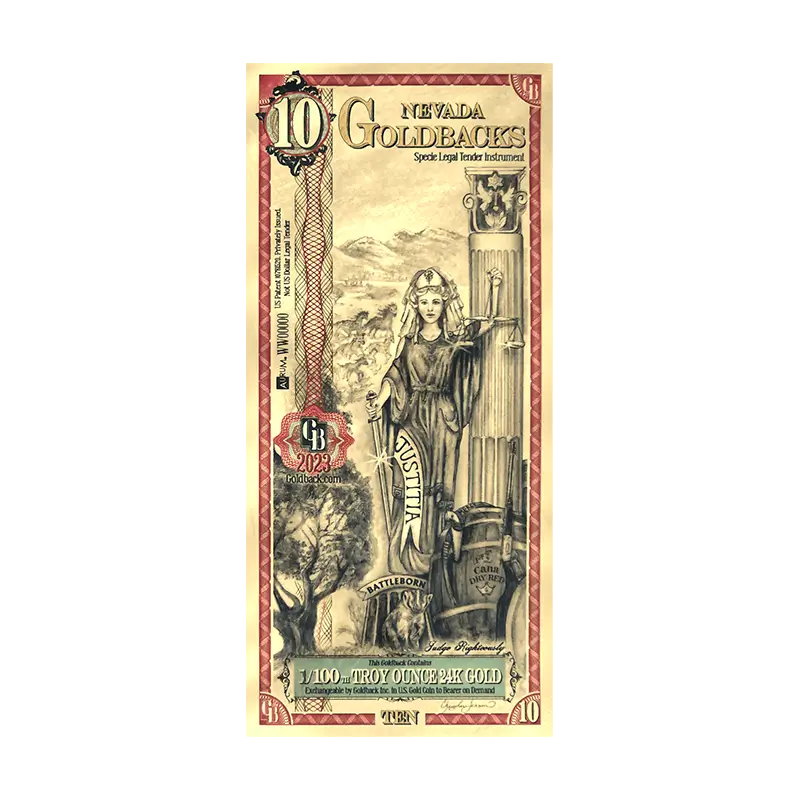
One system, five scales.
The denomination tells you both the note’s Goldback value and its proportional gold content.
- 1
A precise layer of gold
The 1 Goldback contains 1/1,000 of a troy ounce. Every larger denomination scales in direct proportion.
- 2
Protected inside polymer
The gold is deposited in a thin layer and protected within a flexible note built for handling.
- 3
Valued by a published rate
A published Goldback reference rate keeps every denomination and conversion in proportion.
- 4
Accepted by agreement
Goldbacks are not U.S. legal tender. People and businesses may choose to accept them in voluntary transactions.
Questions worth asking.
Read the guidesWhat are Nevada Goldbacks?
Nevada Goldbacks are voluntary gold-backed notes. Each denomination contains a precise amount of 24-karat gold protected within a durable polymer structure.
Are Nevada Goldbacks legal tender?
No. They are not United States legal tender. They can be used in voluntary transactions when both parties agree to accept them.
How much gold is in each note?
The Nevada series contains 1/1,000, 1/200, 1/100, 1/40, and 1/20 of a troy ounce in the 1, 5, 10, 25, and 50 denominations respectively.
Why do Goldbacks cost more than their gold content?
The premium reflects fabrication, detailed artwork, security features, distribution, and the difficulty of making tiny amounts of physical gold practical to handle.
Where can I buy Nevada Goldbacks?
They may be available through local coin shops, Gold ATMs, online precious-metals dealers, and authorized Goldback distributors. Availability and dealer policies vary.