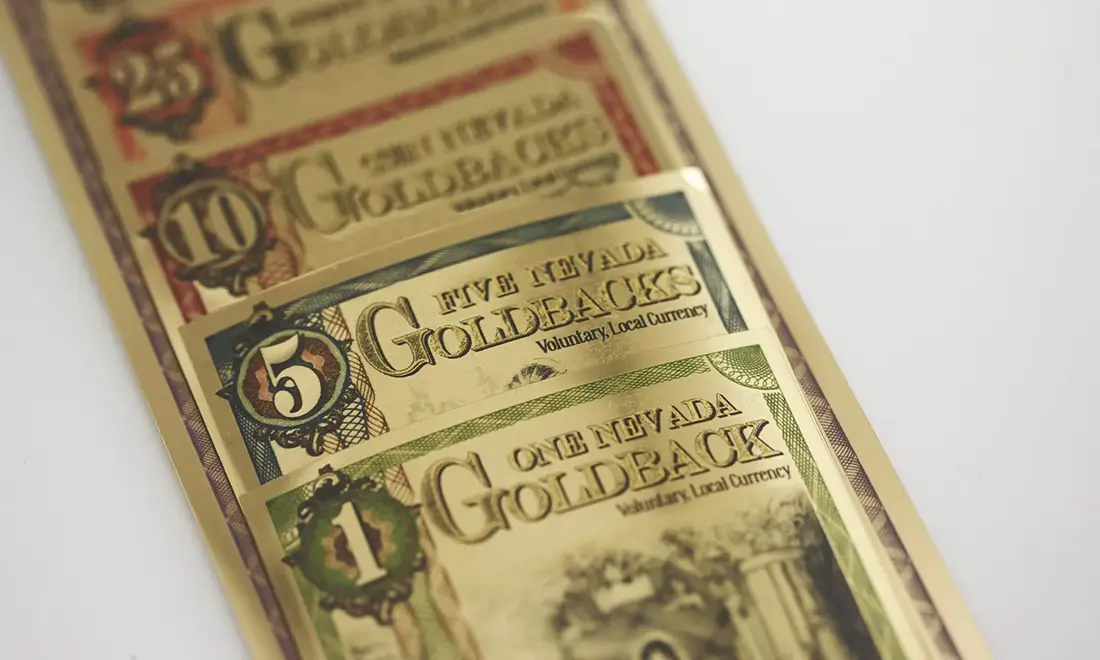
Introduction to Goldbacks
Goldbacks are a form of voluntary, complementary currency that contain a thin layer of 24-karat gold within a polymer coating. Each note is denominated in a specific value, with the amount of gold increasing with the denomination.
The concept was introduced in Utah in 2019 to make a tangible, spendable form of gold practical for everyday voluntary transactions. Its reception led to additional state series, each with artwork reflecting local heritage and culture.
The launch of the Nevada series
Nevada became the second Goldback state in 2020. The series includes 1, 5, 10, 25, and 50 Goldback denominations, each containing a proportional amount of gold.
Every Nevada denomination is built around a virtue. Caritas, Sophia, Justitia, Fortitudine, and Libertas connect the series to Nevada’s history, institutions, landscapes, and ideals.
Adoption and circulation
Collectors and enthusiasts value the Nevada series for both its artwork and its physical gold content. Some owners also use Goldbacks for gifts and voluntary transactions with participating businesses.
Acceptance is based on mutual agreement. Goldbacks are not United States legal tender, and broader everyday usage depends on awareness, education, and a growing network of participating merchants.
Premiums, practicality, and the future
Goldbacks typically trade above the spot value of their gold content. That premium reflects fabrication, detailed artwork, security features, distribution, and the cost of making very small amounts of physical gold practical to handle.
The Nevada series’ future rests on the same forces that shaped its launch: collector interest, merchant participation, public education, and demand for tangible alternatives in voluntary exchange.