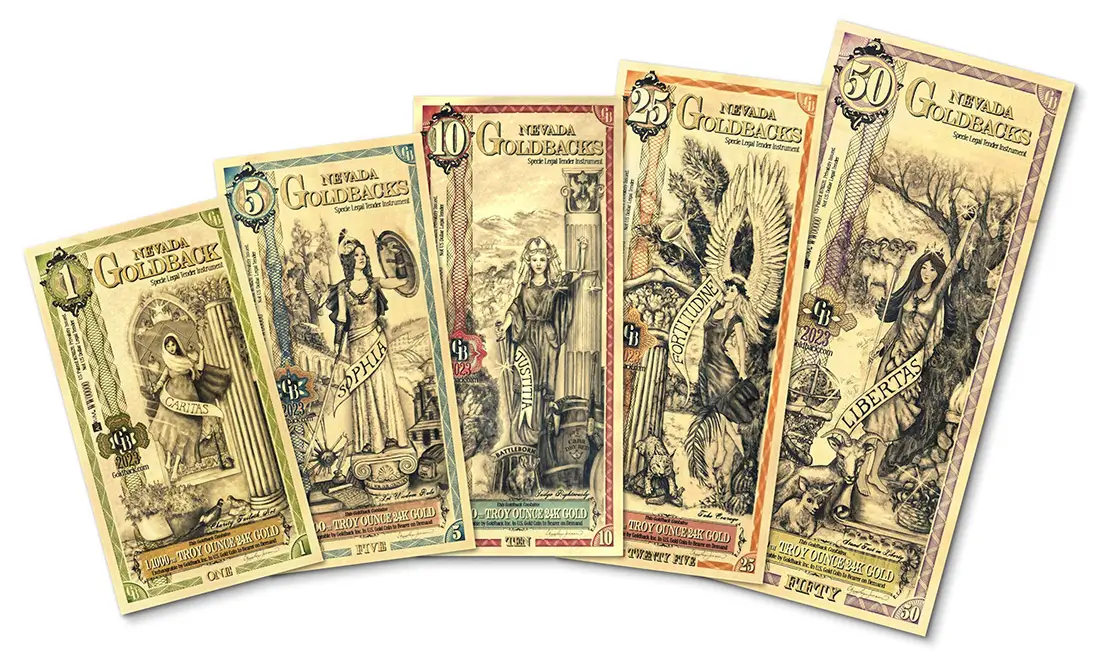
A tangible form of fractional gold
Gold has long served as a store of value and medium of exchange. Goldbacks approach that history at a much smaller scale: each note contains a specified amount of physical gold and is designed to be portable, recognizable, and divisible by denomination.
That combination gives the notes several overlapping roles. Owners may view them as collectibles, gifts, a way to hold fractional gold, or a medium for voluntary barter.
Why Nevada fit the idea
Nevada’s history with precious metals and its culture of economic independence made it a natural early home for a Goldback series. The five designs connect that monetary history with the state’s landscapes, institutions, wildlife, and civic virtues.
What drives interest
- A precise amount of physical 24-karat gold in every denomination.
- Detailed Nevada-specific artwork and a coherent five-note series.
- Small denominations that are easier to gift or exchange than conventional bullion.
- A published daily reference rate for voluntary transactions.
Limits and tradeoffs
Goldbacks carry a premium above their intrinsic gold content because of their production method, artwork, security features, and distribution. Acceptance also remains far more limited than conventional currency.
They are not United States legal tender. Any transaction depends on both parties agreeing to the exchange, and owners should consider tax, legal, pricing, and dealer-policy questions for their own circumstances.